
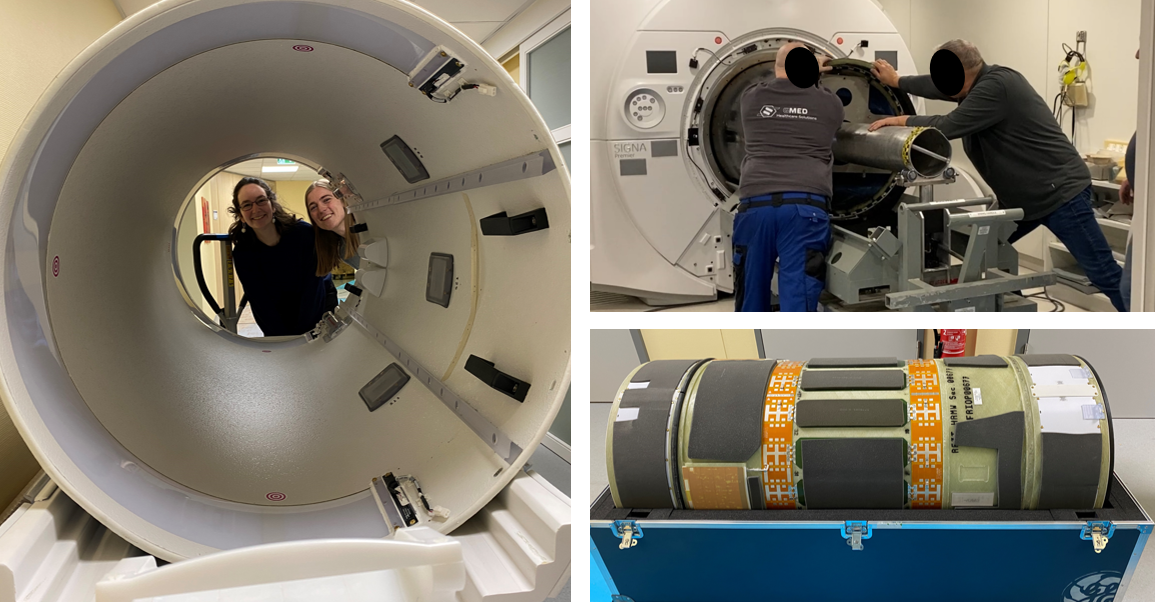
We would like to share that a coil replacement on our MRI scanner has been completed as part of our ongoing efforts to maintain reliable imaging capabilities. In MRI systems, coils are essential components that help generate high-quality images by receiving radiofrequency signals during scans. Occasionally, coils are exchanged to ensure consistent system performance and imaging reliability. This replacement ensures that our MRI system continues to serve our research and collaborative work with the quality and dependability expected in advanced imaging. We sincerely thank everyone involved in planning and carrying out this process!
Monat: Februar 2026
New Publication: How the Brain Encodes Emotions When We See Faces
We are excited to share a new publication addressing how emotions are encoded in the human brain during face perception. Combining high-frequency pupillometry with fMRI, the study disentangles perceptual load and arousal components of emotional face processing. Faces, compared to control stimuli, elicited stronger pupil dilations and enhanced activation in bilateral occipito-fusiform regions and the amygdalae. Notably, angry faces produced the largest pupillary responses, while fearful faces triggered the strongest neural activity in a right-lateralized network centered on the superior temporal sulcus. Overall, the findings suggest that emotional meaning is specified early in perception, with distinct physiological and […]
New Publication: How Face and Fear Processing Are Altered in Juvenile Myoclonic Epilepsy
We are pleased to announce a new publication investigating the neural basis of altered facial emotion perception in Juvenile Myoclonic Epilepsy (JME). Using fMRI and Dynamic Causal Modelling, the study examined effective connectivity within the bilateral fusiform face area-amygdala network during fear processing. Compared to healthy controls, individuals with JME showed pronounced alterations in the task-independent endogenous network architecture, particularly involving enhanced inhibitory self-connections of the right amygdala. The findings also point to abnormal interhemispheric amygdala transfer under fear modulation and associations with clinical epilepsy characteristics. Overall, this work provides first evidence that disrupted FFA-amygdala connectivity may contribute […]